Principal Investigator

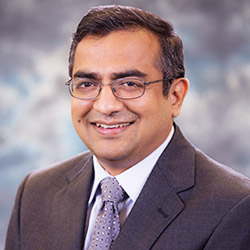
Tanmay Lele is an Assistant Professor in Chemical Engineering at the University of Florida. He obtained the PhD in Chemical Engineering at Purdue University. This was followed by postdoctoral research in Vascular Biology at Harvard Medical School/Children's Hospital. He received the B.Chem.Eng. degree from UDCT, Bombay.


  Featured Publications

2008

Lele TP, Thodeti C, Pendse J and Ingber DE, “Investigating complexity of protein-protein interactions in focal adhesions", Biophysical and Biochemical Research Communications, In press.

2007

Lele TP and Kumar S, “Brushes, cables and ratchets: Recent insights into multiscale assembly and mechanics of cellular structural networks”, Cell Biochemistry and Biophysics, 47: 348-360 (2007).

2006

Lele TP, Pendse J, Kumar S, Salanga M and Ingber DE, “Mechanical forces alter zyxin unbinding kinetics within focal adhesions in living cells”, Journal of Cellular Physiology, 207: 187-94 (2006).

Click here for complete archive

Contact Information

Tanmay Lele
 Department of Chemical Engineering,
 Bldg 723,
 University of Florida,
 Gainesville, FL 32611
 352 392 0317
 tlele@che.ufl.edu

Welcome to the Lele Laboratory Homepage!

We are located in the Department of Chemical Engineering at the University of Florida. We apply new engineering methods to understand and engineer mammalian cell behavior.

Traditional methods to engineer mammalian cell behavior alter intracellular signaling pathways by soluble ligand-based chemical recognition of receptor molecules. Cells are also exquisitely responsive to non-chemical stimuli, such as shear stresses imparted by pulsatile blood flow or cell stretching in flexed muscle. Controlling physical properties of cells such as shape or spreading area can dramatically alter cell behavior. Because maintaining correct spatial distributions of soluble factors inside the tissue micro-environment is challenging, altering cell behavior with such non-chemical cues is very attractive for a variety of applications ranging from developing bio-artificial arteries to engineering heart valves.

Our current scientific focus is on understanding how mechanical forces control cellular processes such as cell motility and gene expression. We use advanced molecular imaging techniques combined with mathematical modeling to quantify transport rates of proteins and binding kinetics of protein-protein interactions inside living cells. This work has applications in advancing biophysical understanding of cardio-vascular disease and cancer

Our current technological focus is on developing new technologies to apply stretching forces to cells, controlling cell-substrate adhesion with nano-textured surfaces, engineering neural stem cell fate in MEMS devices and developing new bio-sensors based on electronic materials. This work has applications in neural and cardio-vascular tissue engineering, and non-invasive, remote detection of cancer .

Research Areas

Physical control of mammalian cell behavior
Exciting new strategies have recently emerged that engineer cell function by physical rather than chemical means. For example, hydrodynamic shear stress increases the speed of endothelial cell migration. Read More  


Design principles of supramolecular complex assembly inside living cells
Reversible, non-covalent interactions are of prime importance in biological processes. Non-covalent bonds are central to the storage of information in DNA Read More


Nanobiotechnology
The detection of bio-active molecules with high sensitivity, specificity and small sample volumes is of interest to a variety of applications ranging from detecting hazardous bio-toxins on the battle-field to timely clinical diagnosis of disease in the patient's home. Read More