|
| |
Department of Chemical Engineering
The department has 24 faculty members engaged in graduate
research and teaching. Many are leading members or directors of special
university centers (see below). The research interests of the faculty span a
wide range of topics including bioengineering, nanotechnology, complex fluids,
advanced materials processing, and surface and interfacial phenomena. This
diversity of interests is reflected in the types of graduate courses available
at both the department and the college.
Our present annual funding level exceeds three million dollars and continues
to increase yearly. Support for our programs comes from federal agencies such as
NSF, NIH, NASA, DOE, a variety of Defense agencies, and non-profit organizations
such as the American Chemical Society, the Whitaker Foundation, and the Gas
Research Institute. The department's emphasis is on the fundamentals that
academic work traditionally provides as the basis for commercial development and
manufacturing. The relevance of our research studies is demonstrated by
industrial funds from a large number of chemical, aerospace, defense and
semiconductor companies that also complement the support we receive from
government funding agencies.
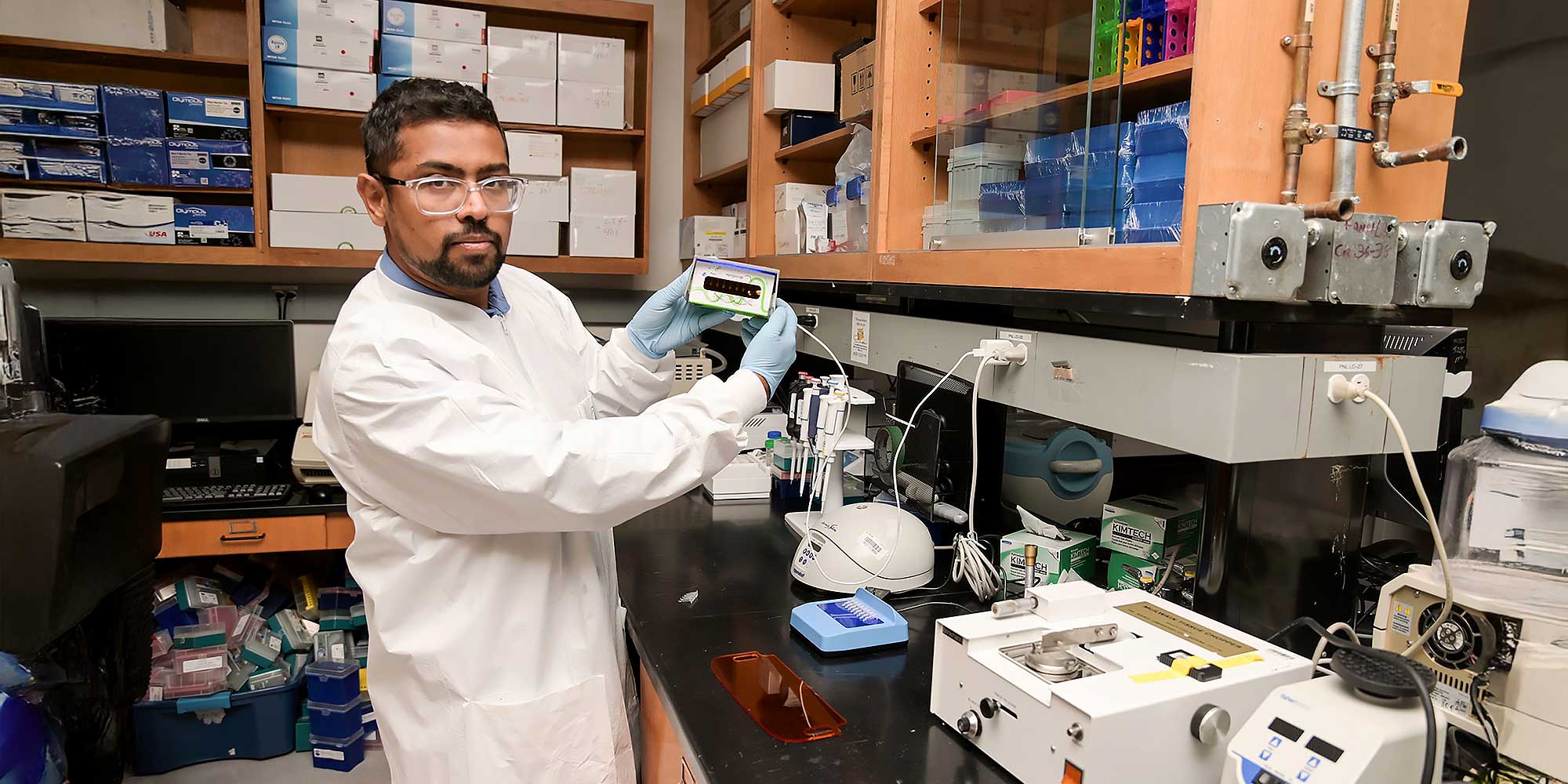
The department is housed in its own four-story, 51,000-square-foot building,
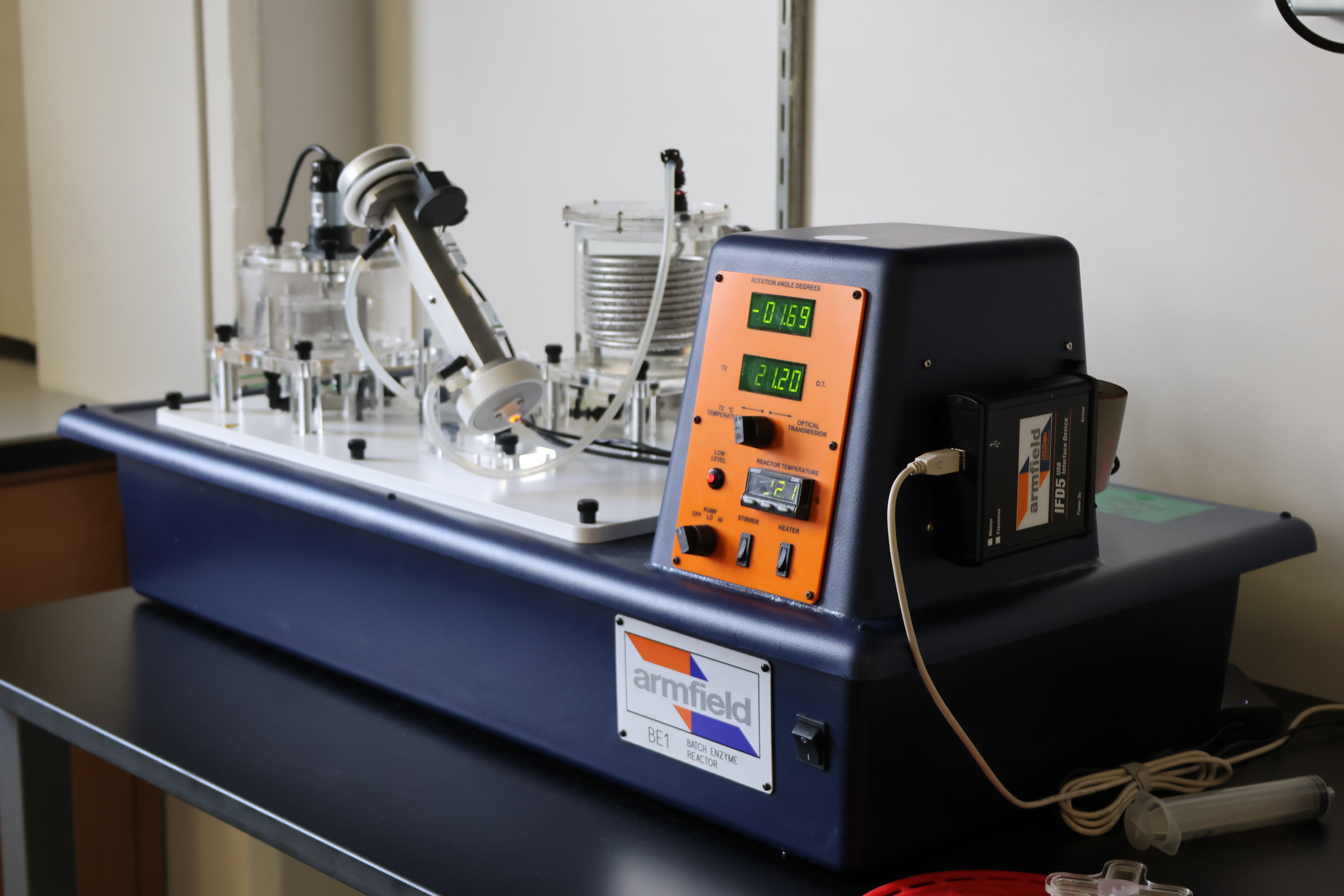
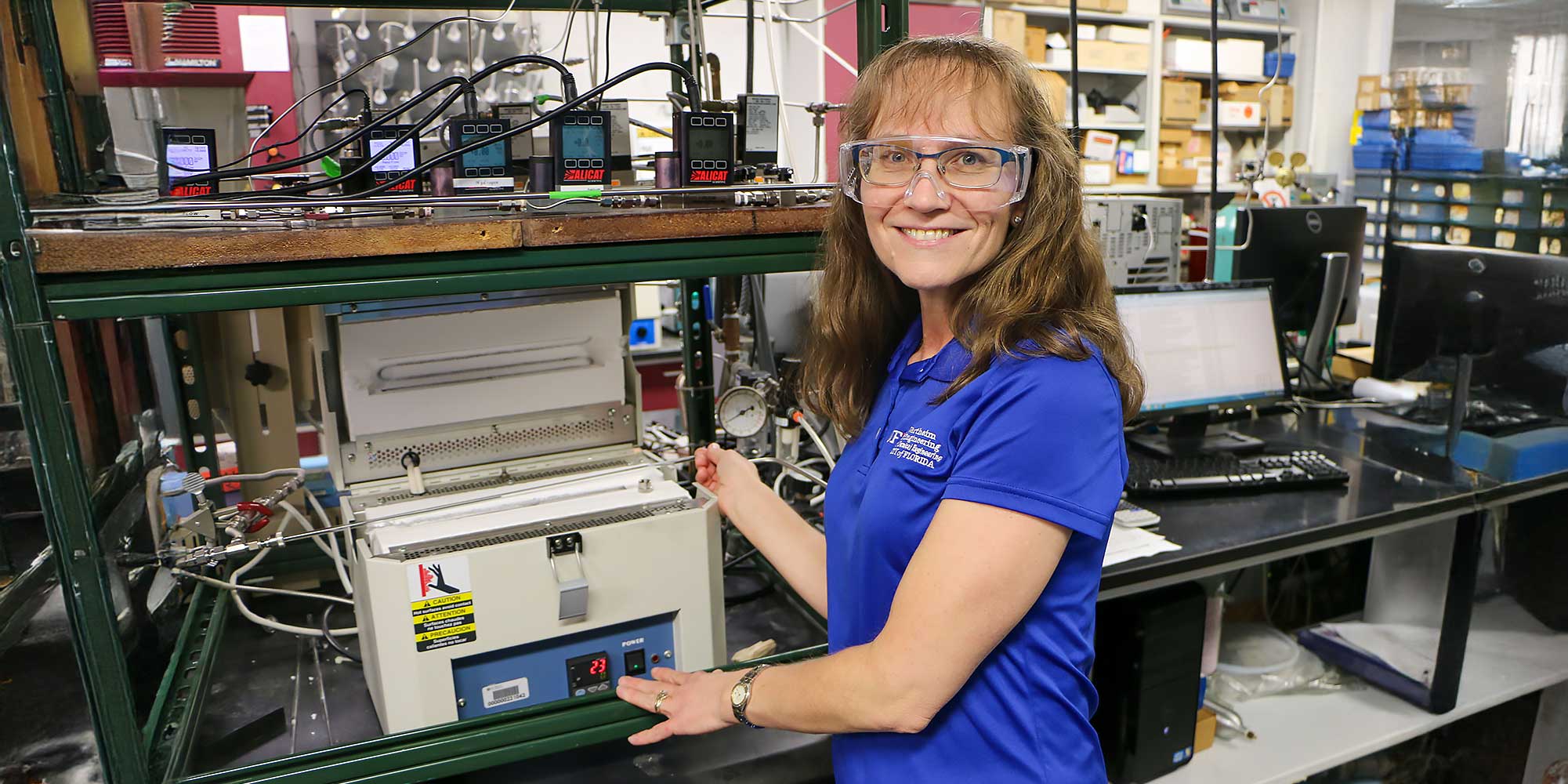
much of which is devoted to research. Department experimental environments range
from ultrahigh vacuum to extreme static pressures, from liquid helium to
refractory melting temperatures. They involve processes that take from
picoseconds to months. Species include electrons, simple molecules, salts,
detergents, polymers, semi-conductors, and bacteria. Analyses range from fluid
convection and dispersion to computer simulation of pollutant transport and
molecular transport, from adaptive control systems to biomass conversion process
design, from the distribution of aqueous solutes in porous electrodes to the
complex reaction mechanisms in thin film deposition.
View Department Brochure
Interdisciplinary Research Centers
Particle Engineering Research Center (PERC)
www.erc.ufl.edu
This NSF-funded interdisciplinary research center is devoted to the
development of innovative particulate-based systems for next-generation
processes and devices that contribute to the nation's economic well being,
quality of the environment, and public health. The research conducted at PERC
impacts a number of diverse industries including advanced materials,
environmental, chemical, drug delivery, cell biology, pharmaceutical, mineral,
energy, agricultural, and food processing. PERC's Research & Development
Facility creates the centerpiece of a world-class operation in particle science
and technology. The 17,000 square foot space includes state-of-the-art
instrumentation for particle characterization and analysis, including a 5000
square foot testbed with a high bay area.
This broadly interdisciplinary program in solid state research and
compound semiconductors ranges from fundamental understanding of new
materials to the design, testing, and characterization of novel
devices. The center’s research includes faculty from the departments of
Chemical Engineering,
Electrical Engineering,
Materials Science and Engineering,
Chemistry, and
Physics. These faculty apply their expertise in advance materials and
microelectronics to research in elemental and compound semiconductors (III-V and
II-VI) and other advanced materials, such as high-temperature superconductors,
conducting polymers, Fermion conductors, and magneto-optic materials.
Florida Center for Solid and Hazardous Waste Management
www.floridacenter.org
This statewide center, hosted at UF, coordinates research, training and
public service efforts in solid and hazardous waste management. The
center's research program has four principal thrusts: develop methods to
enhance solid waste source reduction, recycling and reuse; develop
methods to extend the life of landfills and to reduce the environmental
risk of land disposal; develop technologies to reduce the risks of
municipal solid waste combustion and find beneficial uses for combustion
ash; and develop improved methods for treatment and disposal of medical
waste.
Major Analytical Instrumentation Center (MAIC)
www.maic.mse.ufl.edu
MAIC is a large materials characterization and analysis facility
established to provide analytical support for UF's scientific and
engineering community in meeting the challenges of technology
development. MAIC is a user-oriented facility that provides a point of
connection for many of the department's ongoing interdisciplinary
research activities.
Center for Surface Science and Engineering
csse.che.ufl.edu
The Center for Surface Science and Engineering at UF focuses on
applications of surface science ranging from agricultural sprays to oil
recovery, and on such areas as catalysis, coatings, dispersions,
electronics, flotation of minerals, and lubrication. Furthermore, there
is a strong interest in the study of artificial implants, biomembranes,
lipoproteins, lung surfactants, and opthamology.
Biomedical Engineering Program (BME)
www.bme.ufl.edu
The UF Biomedical Engineering Program offers biomedical research and
educational opportunities for faculty and students from many
disciplines, including chemical engineering. Several of our chemical
engineering faculty have a dual appointment in BME. In addition, several
chemical engineering Ph.D. students have received M.S. degrees in the
BME program, providing them with a broad education that is attractive to
pharmaceutical, biochemical and biomedical device industries.
|